 090003 25483
 Yashoda Hospitals Hitec City Hyderabad, Kothaguda, Telangana 500084
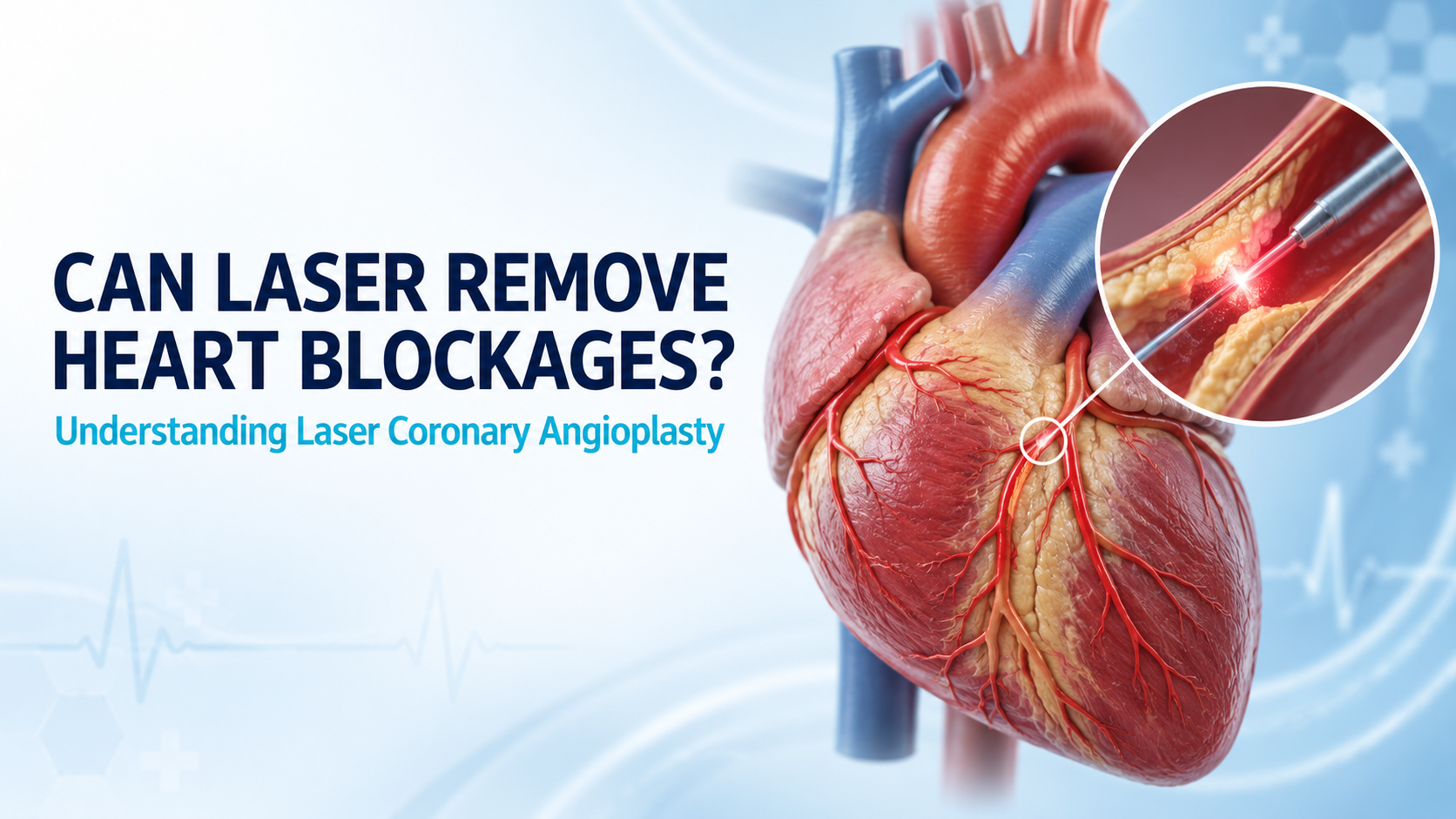
Many patients ask, “Can laser treatment melt away a heart blockage?”
This question often arises after people see advertisements, online videos or WhatsApp messages claiming that laser therapy can completely dissolve blockages without angioplasty or stenting. Although laser technology is available in advanced cardiac catheterisation laboratories, it is important to understand its actual role.
Laser does not simply melt away every heart blockage. It is a specialised, adjunctive technology used during selected complex coronary interventions. It may help an interventional cardiologist treat blood-clot-rich lesions, balloon-uncrossable blockages, certain diseased bypass grafts and some other difficult coronary artery conditions.
What Is Laser Coronary Angioplasty?
Laser coronary angioplasty, commonly known as Excimer Laser Coronary Angioplasty or ELCA, is an advanced catheter-based technique used during certain angioplasty procedures.
A thin laser catheter is guided through the blood vessel to the affected coronary artery. It delivers short pulses of ultraviolet energy to the target area. This energy can help modify selected tissue, plaque and thrombotic material within the artery.
The objective is generally to create or enlarge a pathway so that the cardiologist can proceed with the next stages of treatment, which may include:
- Passing an angioplasty balloon
- Dilating the narrowed artery
- Performing additional calcium-modification treatment
- Delivering and deploying a coronary stent
- Improving blood flow through the affected artery
Therefore, laser treatment is usually not the complete procedure by itself. It supports conventional angioplasty when the blockage is technically difficult to treat.
Does Laser Melt Heart Blockages?
Not in the way the phrase is commonly understood.
Laser treatment should not be considered a universal method that makes cholesterol deposits or calcified blockages disappear completely. It uses controlled pulses of energy to modify selected material within the artery and facilitate angioplasty.
In suitable cases, the laser may help:
- Reduce thrombotic material
- Create a small channel through a resistant lesion
- Improve the ability of devices to cross a blockage
- Prepare the artery for balloon angioplasty or stenting
- Treat selected complex lesions when conventional methods are insufficient
The final treatment plan may still require balloons, stents, intravascular imaging, rotational atherectomy, intravascular lithotripsy or another advanced technique.
When Is Laser Used for Blood Clots in Coronary Arteries?
During a heart attack or another acute coronary event, a blocked artery may contain a large amount of blood clot, also called a thrombus.
In selected patients, laser energy can help reduce or modify the thrombotic material. This may allow the cardiologist to restore blood flow and proceed with angioplasty more effectively.
However, laser is not required for every blood clot. The treatment depends on several factors, including:
- The location and size of the clot
- The amount of blood flow through the artery
- The patient’s clinical condition
- The structure of the blockage
- Whether a balloon or other device can cross the lesion
- The presence of a previously placed stent
- The cardiologist’s assessment during angiography
Research describes excimer laser coronary angioplasty as a technique that can act on thrombus and improve device delivery in selected thrombus-rich lesions. It must be performed using carefully controlled techniques by an experienced interventional cardiologist. NCBI review of ELCA
What Is a Balloon-Uncrossable Blockage?
During conventional angioplasty, the cardiologist first passes a guidewire across the blockage. A balloon catheter is then advanced over the guidewire to dilate the narrowed area.
In some complex cases, the guidewire crosses the blockage, but the balloon cannot pass through it. This is known as a balloon-uncrossable lesion.
It may occur when the blockage is:
- Extremely tight
- Long-standing
- Hard or fibrotic
- Associated with severe calcium
- Located in a difficult part of the artery
- Part of a chronic total occlusion
- Previously treated and now resistant to conventional devices
A small laser catheter may sometimes cross a lesion that a balloon cannot. Laser energy can then modify the blockage and create enough space for other equipment to pass.
After laser treatment, the cardiologist may use a balloon, stent, rotational atherectomy or another plaque-modification technique to complete the intervention.
Can Laser Treat Calcified Heart Blockages?
Coronary artery calcium can make angioplasty technically challenging. Calcium may prevent balloons from crossing or expanding properly and can also interfere with complete stent expansion.
Laser may help in selected calcified lesions, particularly when a balloon or another device cannot cross the blockage. However, laser is not automatically the best treatment for every calcified artery.
Depending on the type, depth and distribution of calcium, the cardiologist may consider:
- Rotational atherectomy
- Intravascular lithotripsy
- Cutting or scoring balloons
- High-pressure non-compliant balloons
- Laser-assisted plaque modification
- A combination of advanced techniques
Intravascular imaging using IVUS or OCT may be used to assess the calcium and guide the choice of treatment.
The technique should therefore be selected according to the individual anatomy rather than simply because calcium is present.
Can Laser Be Used in Diseased Bypass Grafts?
Yes. Laser may be considered in selected patients who previously underwent coronary artery bypass grafting and later developed a blockage in a bypass graft.
Over time, particularly in vein grafts, deposits and blood clots can develop and reduce blood flow. Treating these grafts may be challenging because fragments can sometimes move downstream and obstruct smaller blood vessels.
In carefully chosen cases, laser may help modify thrombotic or degenerative material within the graft. Additional protective devices, balloons or stents may also be required depending on the anatomy and clinical situation.
A detailed angiographic evaluation is essential before deciding whether laser-assisted intervention is appropriate.
Is Laser the Main Treatment for Coronary Artery Blockages?
No. Laser is generally an adjunctive treatment rather than the primary treatment for coronary artery disease.
Most treatable coronary blockages can be managed with standard methods such as:
- Medical therapy
- Balloon angioplasty
- Coronary stenting
- Rotational atherectomy
- Intravascular lithotripsy
- Coronary artery bypass surgery
Laser is typically reserved for selected complex situations in which it offers a technical advantage.
The availability of laser technology does not mean that every patient needs it. Equally, not needing laser does not indicate that a patient is receiving less advanced care. The best treatment is the one that safely addresses the patient’s particular artery, symptoms and overall health.
What Happens During Laser-Assisted Coronary Angioplasty?
The procedure is performed in a cardiac catheterisation laboratory.
1. Coronary angiography
Contrast dye and X-ray imaging are used to identify the location, severity and characteristics of the blockage.
2. Passing the guidewire
A fine guidewire is carefully advanced across the narrowed or blocked portion of the artery.
3. Positioning the laser catheter
A small laser catheter is passed over the guidewire and positioned at the blockage.
4. Delivering laser energy
Controlled pulses of energy are delivered while the catheter is slowly advanced. The technique and energy settings are selected according to the lesion.
5. Completing the angioplasty
Once the lesion has been modified, the cardiologist may use balloons, stents or another plaque-modification device to achieve an appropriate result.
6. Confirming blood flow
Final angiographic images are taken to assess blood flow and the treated segment. IVUS or OCT may also be used to check the vessel and stent result from inside the artery.
What Is Laser Lead Extraction?
Laser technology also has an important application outside coronary angioplasty.
Pacemakers and implantable cardioverter-defibrillators are connected to the heart through thin wires known as leads. As these leads remain in the body for many years, scar tissue can form around them and attach them to the walls of the veins or structures within the heart.
Most functioning leads are not routinely removed simply because they are old. Extraction may be considered when there is a definite clinical reason, such as:
- Infection involving the device or leads
- A damaged or malfunctioning lead
- Obstruction of the vein
- A requirement to upgrade or revise a cardiac device
- Interference between multiple leads
- Another important clinical indication identified by the treating team
During laser lead extraction, a specialised laser sheath is advanced around the lead. Controlled energy helps release the surrounding scar tissue, allowing the lead to be removed.
Lead extraction is a specialised procedure with potentially serious risks. It should be performed by a trained team in an appropriately equipped hospital after carefully assessing the benefits and risks. Published clinical evidence describes laser sheaths as an established tool for extracting leads that have become attached to vascular or cardiac tissue. Clinical review of laser lead extraction
What Are the Possible Benefits of Laser-Assisted Treatment?
When used for an appropriate indication, potential benefits may include:
- Facilitating treatment of a difficult coronary blockage
- Helping equipment cross a resistant lesion
- Modifying selected blood-clot-rich blockages
- Supporting angioplasty in diseased bypass grafts
- Assisting the treatment of certain previously stented segments
- Helping avoid abandonment of selected complex procedures
- Supporting the extraction of pacemaker or defibrillator leads when removal is medically necessary
These benefits vary from one patient to another and cannot be guaranteed.
Are There Risks?
Laser-assisted coronary intervention and laser lead extraction are invasive procedures. Possible risks depend on the procedure and the patient’s condition.
Risks of coronary intervention may include:
- Bleeding or bruising at the access site
- Damage to the coronary artery
- Arterial dissection or perforation
- Disturbance of heart rhythm
- Movement of clot or plaque material downstream
- Sudden reduction in blood flow
- Contrast-related kidney injury
- Allergic reaction to contrast
- Heart attack
- Need for emergency surgery
- Rarely, stroke or death
Lead extraction carries additional risks, including injury to a major vein, damage to the heart, internal bleeding and the possibility of emergency cardiac surgery.
Careful patient selection, appropriate imaging, established safety protocols and an experienced cardiac team are essential.
Who May Be Considered for Laser Treatment?
A patient may be evaluated for laser-assisted treatment when:
- A coronary blockage contains a significant amount of thrombus
- A guidewire crosses the lesion, but the balloon cannot
- A conventional angioplasty device cannot pass through the blockage
- There is a difficult blockage in a bypass graft
- A previously treated coronary segment requires specialised management
- An old pacemaker or defibrillator lead must be removed for a valid medical reason
Final suitability can only be determined after reviewing the patient’s symptoms, angiogram, medical history, heart function, kidney function and overall risk.
Frequently Asked Questions
1. Can laser remove a 100% heart blockage?
Laser may assist in selected chronic total occlusions, particularly when equipment cannot cross or dilate the lesion. It does not guarantee that every 100% blockage can be opened. The result depends on the blockage’s length, calcium, location, duration and surrounding anatomy.
2. Can laser angioplasty replace a stent?
Usually, no. Laser often prepares the blockage so that balloon angioplasty and stenting can be completed. Whether a stent is needed depends on the condition of the artery and the result after lesion preparation.
3. Is laser angioplasty completely painless?
The procedure is generally performed under local anaesthesia with medication for comfort. Patients may feel pressure at the access site or temporary chest discomfort during treatment. The team continuously monitors the patient.
4. Is laser better than rotational atherectomy?
Neither technology is universally better. They work differently and are chosen for different lesion characteristics. Some complex cases may require both technologies during the same procedure.
5. Is laser suitable for every calcified artery?
No. Some calcified blockages are better treated with rotational atherectomy, intravascular lithotripsy or specialised balloons. Imaging and angiography help determine the most appropriate approach.
6. Can laser prevent bypass surgery?
Laser-assisted angioplasty may provide a catheter-based treatment option in certain difficult cases, but it cannot replace bypass surgery for every patient. The decision depends on the number and location of blockages, heart function, diabetes, surgical risk and overall anatomy.
7. Is laser useful during a heart attack?
It may be useful in selected heart attacks involving a high thrombus burden or technically difficult lesions. Emergency treatment should never be delayed while searching for a hospital offering laser technology.
8. Will the blockage return after laser treatment?
Restenosis or a new blockage can still occur after any coronary intervention. Taking prescribed medication, controlling cholesterol, managing diabetes and blood pressure, avoiding tobacco, exercising as advised and attending follow-up visits remain important.
9. Does every hospital provide laser coronary angioplasty?
No. It requires specialised equipment, trained operators and an experienced catheterisation laboratory team. It is usually available at selected advanced cardiac centres.
10. How will I know whether I need laser treatment?
The need is often identified after reviewing the coronary angiogram or during angioplasty when conventional equipment cannot cross or adequately treat the blockage. Your interventional cardiologist will explain why laser is being considered and what other options are available.
The Most Important Message
Laser therapy is an important advancement in interventional cardiology, but it should not be viewed as a simple method for melting away all heart blockages.
Its true value lies in selected complex situations, including:
- Blood-clot-rich coronary lesions
- Balloon-uncrossable blockages
- Certain difficult calcified lesions
- Blockages in bypass grafts
- Selected resistant or previously treated lesions
- Medically necessary extraction of old cardiac-device leads
The decision to use laser must be based on the patient’s anatomy, clinical condition and procedural requirements. A detailed evaluation by an experienced interventional cardiologist is essential.
About Dr. V. Rajasekhar Varada
Dr. V. Rajasekhar, MD, DM (Cardiology), is a senior interventional cardiologist and Clinical Director with 27 years of experience in Hyderabad.
He is known for his expertise in both interventional cardiology and electrophysiology. As a high-volume operator, he performs approximately 700 angioplasties annually, around 300 electrophysiology procedures and more than 100 cardiac-device implantations, including pacemakers, implantable defibrillators and cardiac resynchronisation devices.
His areas of expertise include:
- Complex coronary angioplasty
- Image-guided PCI
- Rotational atherectomy
- Laser coronary angioplasty
- High-risk PCI supported by Impella
- TAVR and TMVR
- Electrophysiology procedures
- Pacemaker and defibrillator implantation
- Leadless pacemaker implantation
- Cardiac resynchronisation therapy
- Complex cardiac-device management
Dr. Rajasekhar is also a certified TAVR operator and proctor, a proctor for image-guided PCI and rotational atherectomy, and a proctor for cardiac-device implantation, including leadless pacemakers.
Consultation Location
Dr. V. Rajasekhar Varada
MD, DM (Cardiology)
Senior Interventional Cardiologist and Clinical Director
Yashoda Hospitals, Hitec City, Hyderabad
This article is intended for general educational purposes and should not be used as a substitute for an individual medical consultation. Patients with chest pain, severe breathlessness, sweating, fainting or other possible symptoms of a heart attack should seek emergency medical care immediately.