 090003 25483
 Yashoda Hospitals Hitec City Hyderabad, Kothaguda, Telangana 500084
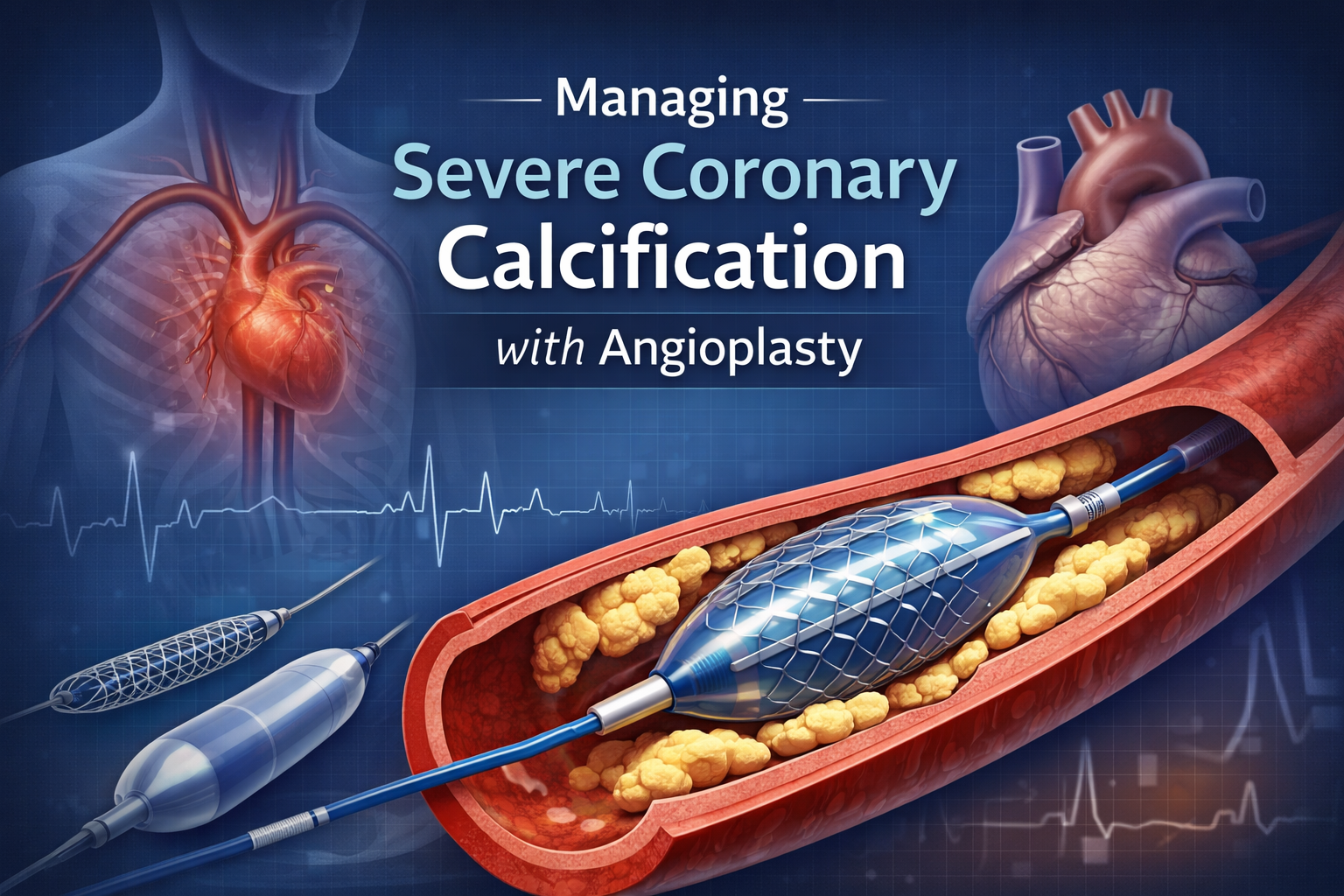
When people hear the word angioplasty, they usually think of a straightforward procedure used to open a blocked heart artery. In many cases, that is true. But some blockages are far more complex than routine coronary narrowing. One of the most challenging among them is a severely calcified lesion.
A calcified coronary lesion is a blockage that has become hard because of calcium deposits built up inside the artery over many years. Instead of being soft or compressible, the plaque becomes rigid and stone-like. This makes treatment more difficult because the artery does not expand easily with a regular balloon, and the stent may not open properly unless the calcium is adequately treated first.
That is why angioplasty for severely calcified lesions is considered a highly specialized procedure. It requires careful planning, advanced imaging, expert judgment, and the use of modern technologies designed specifically to modify calcium before stent placement. For patients with such complex coronary disease, getting the right treatment from an experienced interventional cardiologist can make a major difference in both immediate success and long-term outcome.
What are severely calcified coronary lesions?
Coronary arteries supply oxygen-rich blood to the heart muscle. Over time, fatty plaque can build up inside these arteries, narrowing blood flow. In some patients, especially those with long-standing disease, this plaque becomes heavily calcified. Calcium makes the blockage hard, stiff, and resistant to standard treatment.
These lesions are more commonly seen in people who are older or who have conditions such as:
- Long-standing diabetes
- Chronic kidney disease
- High blood pressure
- High cholesterol
- Smoking history
- Diffuse coronary artery disease
- Prior heart disease or long-term untreated blockages
In such patients, the artery may become so rigid that a normal angioplasty balloon cannot open it effectively. Even if a stent is placed, it may not expand fully. An under-expanded stent can lead to poor blood flow, chest pain returning later, restenosis, or a higher risk of future complications.
This is why severely calcified lesions require a different approach. The goal is not simply to place a stent. The real goal is to prepare the artery properly so that the stent can expand safely and completely.
Why calcified lesions are more difficult to treat
Calcified blockages are challenging because the artery loses its flexibility. A routine balloon may fail to cross the lesion or may not expand it sufficiently. The stent may not reach the target area easily, or once deployed, it may remain partially compressed due to the rigid calcium surrounding it.
This creates several concerns:
- Difficulty in crossing the blockage with balloons or stents
- Incomplete lesion expansion
- Improper stent deployment
- Greater technical complexity during the procedure
- Increased risk of long-term stent-related problems
In complex cases, simply forcing a balloon or stent into a calcified lesion is not the right strategy. Instead, the calcium must first be modified or fractured so the artery can become more compliant. This preparation is the key to successful angioplasty in these patients.
Symptoms patients may experience
Severely calcified coronary lesions can cause the same symptoms as other significant heart blockages, but because these lesions are often associated with advanced coronary disease, symptoms may be more persistent or occur in high-risk patients.
Common symptoms include:
- Chest pain or chest tightness
- Shortness of breath while walking or climbing stairs
- Heaviness in the chest on exertion
- Reduced exercise tolerance
- Fatigue
- Symptoms during a heart attack
Some patients may not even realize they have such severe disease until they undergo coronary angiography for ongoing symptoms or an acute cardiac event.
The importance of advanced evaluation
One of the biggest advances in modern cardiology is the ability to look inside the coronary artery using intravascular imaging. Tools such as IVUS and OCT help the cardiologist understand how much calcium is present, where it is located, how deep it is, and whether it is affecting the full circumference of the vessel.
This information is extremely important because not all calcified lesions behave the same way. Some may respond to specialty balloons, while others need dedicated calcium-modification devices. Without proper evaluation, there is a risk of placing a stent in an artery that has not been adequately prepared.
Modern treatment of calcified coronary disease is therefore image-guided, precision-based, and highly individualized.
Treatment options for severely calcified lesions
There is no single technique that works for every calcified blockage. The choice depends on the severity of calcium, vessel size, lesion length, artery location, and the patient’s overall condition.
1. Specialty balloons
In selected cases, special balloons such as non-compliant balloons, cutting balloons, or scoring balloons may be used to prepare the lesion. These balloons are designed to deliver controlled force to the plaque and improve vessel expansion.
They can be effective in moderate calcium, but in very severe or circumferential calcification, balloons alone may not be enough.
2. Rotational atherectomy
Rotational atherectomy is a technique that uses a tiny diamond-coated burr rotating at very high speed to modify hard calcium. This does not “drill out” the artery in a crude way, as some patients may imagine. Instead, it carefully alters the superficial calcium and helps create a channel so that balloons and stents can pass more effectively.
This is especially useful in very tight, heavily calcified lesions that are difficult to cross with conventional devices.
3. Orbital atherectomy
Orbital atherectomy is another specialized calcium-modification method. It works differently from rotational atherectomy but serves a similar purpose: improving lesion compliance before stenting. It may be chosen in specific lesion types based on operator preference and anatomical suitability.
4. Intravascular lithotripsy (IVL)
Intravascular lithotripsy is one of the most important recent advances in the treatment of calcified coronary lesions. This technology uses sonic pressure waves delivered through a balloon catheter to crack calcium within the artery wall. Once the calcium is fractured, the artery becomes more expandable, allowing safer and better stent deployment.
This is especially helpful in lesions where the balloon can cross but the calcium is too rigid for proper expansion. IVL has made treatment of many calcified lesions more predictable and controlled.
5. Combination techniques
Some of the most difficult lesions require a combination approach. For example, one device may be used first to make the lesion crossable, followed by another technique to further modify deeper calcium before the final stent is placed.
This is why experience matters. The best results come from choosing the right tool for the right lesion rather than using the same method in every patient.
How the procedure is performed
Angioplasty for severely calcified lesions is still a minimally invasive catheter-based procedure. It is usually performed through a blood vessel in the wrist or groin, depending on the patient’s anatomy and procedural needs.
Once the artery is accessed, the cardiologist performs coronary angiography to identify the blockage. In many cases, intravascular imaging is then used to study the calcium in detail. After this, the lesion is prepared using the chosen calcium-modification technique. Once the artery is adequately opened and softened, a balloon may be used again, followed by drug-eluting stent placement if required.
At the end of the procedure, imaging may be repeated to confirm that the stent is fully expanded and properly apposed to the artery wall.
Although the procedure is more complex than standard angioplasty, it remains far less invasive than open-heart surgery and can offer excellent relief and improved heart blood flow in properly selected patients.
Recovery after angioplasty for calcified lesions
Recovery depends on the patient’s overall condition, the complexity of the procedure, and whether the angioplasty was done electively or during an emergency such as a heart attack.
In general, patients are monitored after the procedure and may stay in the hospital for observation. Recovery usually includes:
- Monitoring for chest pain or rhythm changes
- Checking kidney function and blood pressure
- Starting or continuing blood-thinning medications
- Cholesterol-lowering therapy
- Diabetes and blood pressure control
- Advice regarding diet, walking, and gradual return to activity
Most patients can resume routine activities gradually based on their doctor’s advice. The long-term outcome depends not only on the angioplasty itself but also on strict control of cardiac risk factors afterward.
Why expertise is critical in these cases
Severely calcified coronary lesions are among the most technically demanding situations in interventional cardiology. These cases require much more than simply passing a wire and placing a stent. They need:
- Correct interpretation of imaging
- Accurate assessment of calcium severity
- Selection of the right lesion-preparation strategy
- Familiarity with advanced devices
- Precision in final stent optimization
That is why treatment should ideally be performed by an experienced cardiologist in a well-equipped center capable of handling complex coronary interventions.
For patients in Hyderabad, expert evaluation by Dr. V. Rajasekhar, Senior Cardiologist at Yashoda Hospitals, Hitech City, can help determine whether a severely calcified coronary blockage is suitable for advanced angioplasty and which technique is best suited for a safe and effective result.
A more hopeful message for patients
Being told that you have a “calcified blockage” can sound alarming. Many patients worry that angioplasty may not be possible or that surgery is the only option. But modern interventional cardiology has changed this dramatically.
Today, with advanced imaging, precision-guided planning, calcium-modification technologies, and expert stent optimization, many severely calcified lesions can be treated successfully through angioplasty. The key lies in choosing the right center, the right specialist, and the right technique for your specific anatomy.
In experienced hands, even highly complex coronary disease can often be treated with confidence, safety, and durable results.
FAQs
1. What is a severely calcified lesion in the heart?
It is a coronary artery blockage that has become hard due to heavy calcium deposits, making it more difficult to treat than a routine blockage.
2. Can angioplasty be done for calcified blockages?
Yes. Many calcified blockages can be treated successfully with advanced angioplasty techniques and specialized devices.
3. Why is calcium in the artery a problem?
Calcium makes the artery stiff and prevents proper balloon expansion and stent deployment if not treated adequately.
4. What is intravascular lithotripsy?
It is a modern balloon-based treatment that uses sonic waves to crack calcium in the artery and improve stent expansion.
5. Is atherectomy safe?
When performed in experienced hands and in the right patients, atherectomy is a valuable and effective technique for treating calcified lesions.
6. Is this procedure riskier than normal angioplasty?
It is more complex than routine angioplasty, but with proper planning and expert care, good outcomes are achievable.
7. Will I always need a stent after calcium treatment?
In most cases, stenting is done after preparing the lesion, but the final decision depends on the artery and procedural findings.
8. How do doctors know which treatment method to use?
The choice is based on angiography, intravascular imaging, severity of calcium, and the exact nature of the blockage.
9. Is surgery better than angioplasty for calcified lesions?
Not always. Many calcified lesions can be treated successfully with advanced angioplasty. The decision depends on the number of blockages, location, overall heart condition, and patient profile.
10. Where can I get treatment for severely calcified coronary lesions in Hyderabad?
Patients can seek expert evaluation from Dr. V. Rajasekhar at Yashoda Hospitals, Hitech City, Hyderabad, for advanced coronary intervention and complex angioplasty care.
Dr. V. Rajasekhar
MD, DM (Cardiology)
Cardiology | 27 Years
Yashoda Hospitals, Hitech City, Hyderabad