 090003 25483
 Yashoda Hospitals Hitec City Hyderabad, Kothaguda, Telangana 500084
Sometimes, the heart doesn’t shout it whispers.
You may feel:
-
Your heartbeat is irregular
-
You get tired easily
-
You feel breathless while doing simple activities
-
Your heart feels like it’s fluttering or racing
Most people ignore these signs. They blame stress, age, lack of sleep, or a busy lifestyle. But in many cases, these symptoms point to a common yet serious heart rhythm problem called Atrial Fibrillation (AF).
This blog explains AF in simple, real-life language what it is, why it happens, how to recognize it, and how it can be treated today.
What Is Atrial Fibrillation (AF)?
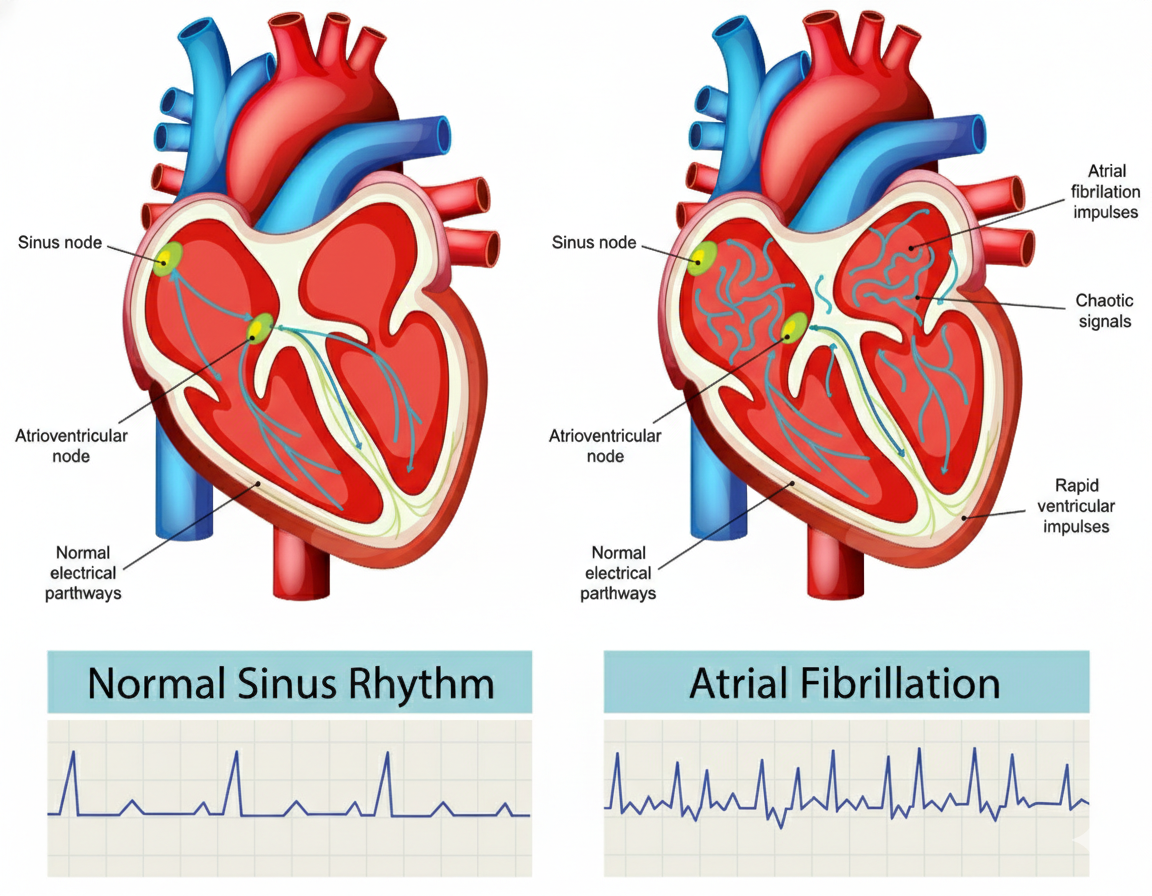
In a healthy heart, the heartbeat follows a steady, regular rhythm, like a drumbeat.
In Atrial Fibrillation, this rhythm becomes chaotic.
The upper chambers of the heart (called the atria) start beating:
-
Too fast
-
Too irregular
-
Completely out of sync with the lower chambers
As a result:
-
The heart does not pump blood efficiently
-
Blood may pool inside the heart
-
Blood clots can form
👉 AF is not just a heartbeat problem—it significantly increases the risk of stroke.
Why Is AF Dangerous?
AF itself may not always feel severe, but its complications can be life-threatening.
Major risks include:
-
Stroke – AF increases stroke risk by nearly 5 times
-
Heart failure – because the heart works inefficiently
-
Sudden worsening of symptoms over time
-
Reduced quality of life
Many people discover they have AF only after a stroke, which is why early detection is critical.
What Causes Atrial Fibrillation?
AF usually develops over time due to stress on the heart.
Common causes:
-
High blood pressure (especially long-standing, uncontrolled BP)
-
Diabetes
-
Thyroid disorders
-
Heart valve disease
-
Coronary artery disease
-
Heart failure
-
Obesity
-
Excess alcohol intake
-
Smoking
-
Poor sleep (especially sleep apnea)
-
Aging
Sometimes, AF occurs even without a clear cause—this is called lone AF.
Common Symptoms of AF
AF symptoms vary from person to person.
You may experience:
-
Irregular or racing heartbeat
-
Shortness of breath
-
Unusual tiredness
-
Chest discomfort
-
Dizziness or light-headedness
-
Reduced exercise tolerance
⚠️ Important:
Some people have no symptoms at all. This is called silent AF—and it is just as dangerous.
How Is AF Diagnosed?
AF is usually detected using simple tests:
-
ECG (Electrocardiogram) – confirms irregular rhythm
-
Holter monitoring – 24–48 hour heart rhythm tracking
-
Event monitors or wearable devices
-
Echocardiography – to check heart structure
-
Blood tests to look for underlying causes
Early diagnosis makes treatment far more effective.
Types of Atrial Fibrillation
AF is classified based on how long it lasts:
-
Paroxysmal AF
Comes and goes on its own -
Persistent AF
Lasts longer than 7 days and needs treatment to stop -
Long-standing Persistent AF
Continues for over a year -
Permanent AF
Rhythm cannot be restored, focus is on control and prevention
How Is AF Treated?
AF treatment focuses on three key goals:
1. Prevent Stroke
This is the most important step.
-
Blood-thinning medications reduce clot risk
-
These medicines are life-saving when used correctly
2. Control Heart Rate or Rhythm
-
Medicines to slow heart rate
-
Medicines to restore normal rhythm
-
Electrical cardioversion in selected cases
3. Treat the Root Cause
-
Control BP, sugar, thyroid
-
Weight management
-
Sleep apnea treatment
-
Lifestyle changes
What Is Catheter Ablation?
For many patients, medicines are not enough.
Catheter ablation is a minimally invasive procedure that:
-
Targets faulty electrical signals in the heart
-
Helps restore and maintain normal rhythm
-
Improves quality of life
-
Reduces AF recurrence
In experienced centers, ablation is safe and highly effective, especially when done early.
Can Lifestyle Changes Help AF?
Absolutely. Lifestyle plays a huge role in AF control.
Helpful changes:
-
Regular physical activity
-
Weight loss if overweight
-
Reducing alcohol
-
Quitting smoking
-
Managing stress
-
Treating sleep disorders
-
Eating a heart-healthy diet
AF treatment works best when medical care and lifestyle changes go together.
Living With AF: What You Should Know
AF is often a long-term condition, but it is manageable.
With the right treatment:
-
Many people live completely normal lives
-
Stroke risk can be dramatically reduced
-
Symptoms can be well controlled
-
Heart function can be preserved
The key is early action and regular follow-up.
Frequently Asked Questions (FAQs)
1. Is atrial fibrillation a heart attack?
No. AF is a rhythm disorder, not a blockage of heart arteries.
2. Can AF be cured permanently?
In many patients, especially with early treatment and ablation, AF can be well controlled or eliminated for long periods.
3. Is AF life-threatening?
AF itself may not be immediately fatal, but untreated AF can lead to stroke or heart failure, which are life-threatening.
4. Do I need blood thinners forever?
Not always. The decision depends on age, stroke risk factors, and heart condition. This must be individualized.
5. Can young people get AF?
Yes. AF can occur even in younger individuals, especially with obesity, stress, thyroid issues, or genetic factors.
6. Can exercise trigger AF?
Moderate exercise helps. Extreme endurance training may trigger AF in some people.
7. Is AF common?
Yes. AF is the most common heart rhythm disorder worldwide, and its numbers are rising.
8. Can AF be silent?
Yes. Many people have AF without symptoms and discover it only during routine tests or after complications.