 090003 25483
 Yashoda Hospitals Hitec City Hyderabad, Kothaguda, Telangana 500084

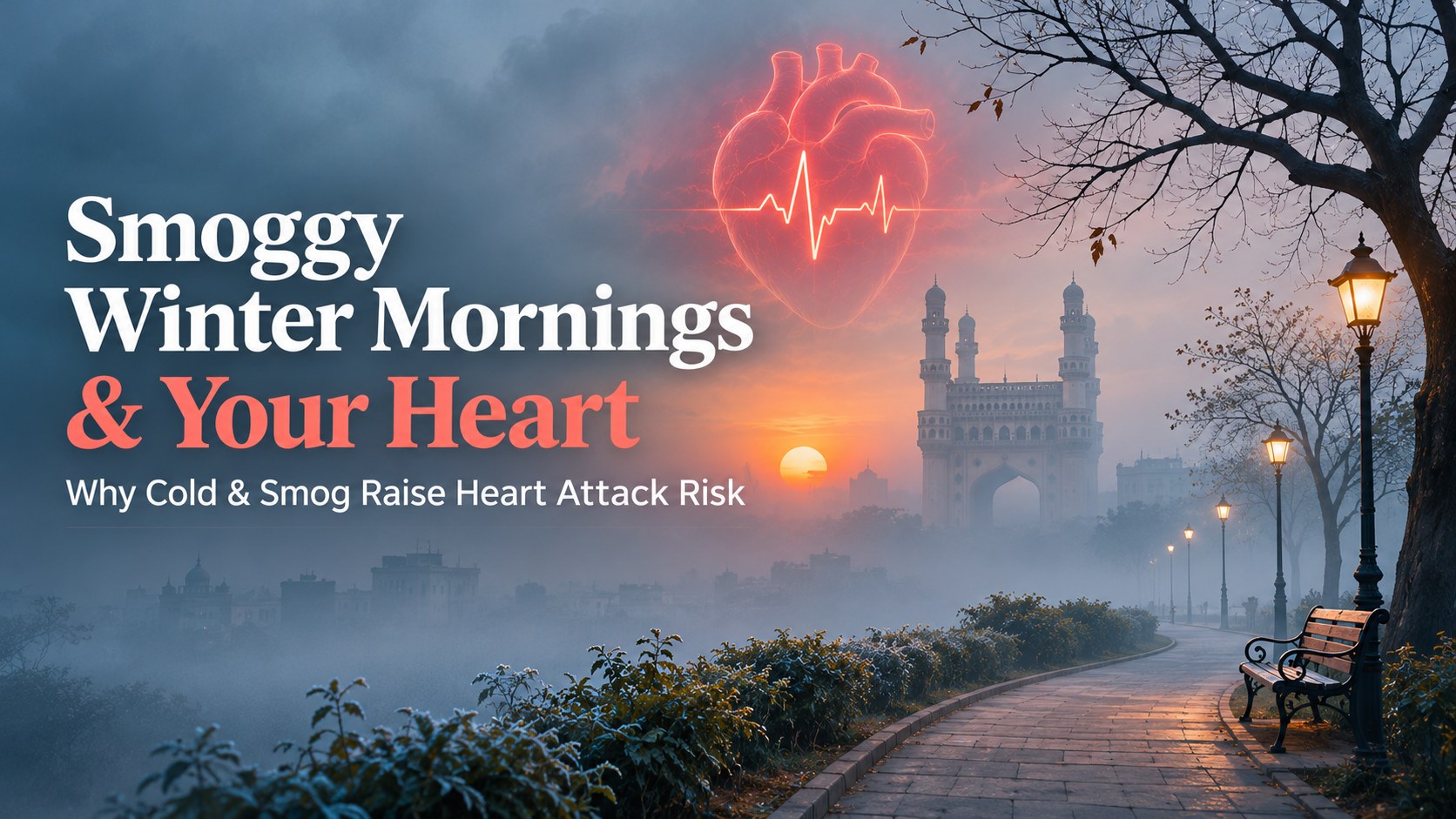
“It’s just a little cold and hazy in the mornings. Why are doctors warning heart patients about Hyderabad’s winter?”
MD, DM (Cardiology) · Interventional Cardiologist & Electrophysiologist✔ Medically reviewed⏱ 8 min read
How Cold and Smog Strain the Heart
❄️ What the cold does
Blood vessels in the skin tighten to save heat. Blood pressure and heart rate rise, so the heart needs more oxygen. Blood also tends to become thicker and more likely to clot in the cold.
🌫️ What smog does
PM2.5 particles inflame the lining of arteries, raise blood pressure, make platelets stickier and can unsettle the heart’s rhythm. In someone with fatty plaques, this can trigger a plaque to rupture.
In Hyderabad, winter mornings bring both at the same time. On calm, cool nights, a layer of cold air near the ground traps vehicle exhaust, construction dust and smoke from burning garbage. It is thickest around dawn, exactly when the body is already in its natural “morning surge” of blood pressure and stress hormones.
“Every winter we see a familiar pattern: a patient with known heart disease or uncontrolled BP goes for an early-morning walk in the cold, often in traffic smog, and develops chest pain at the park. Most of these events can be avoided by simply walking later, warming up and keeping medicines on track.”
Your Heart Weather Forecast
Think of it like a weather forecast for your heart. These everyday winter situations carry very different levels of strain:
🌡️ Winter heart strain meter
Who Needs to Be Most Careful
Known heart disease
A past heart attack, stents, bypass surgery, heart failure or valve disease.
High BP, diabetes or high cholesterol
Especially if these are not well controlled.
Older adults
People over 60 feel the cold more and adapt less easily.
Smokers and lung patients
Smoking, COPD and asthma add to the strain from polluted air.
Rules for Safer Winter Walks in Hyderabad
Whether you walk at KBR Park, Necklace Road, Sanjeevaiah Park or around your gated community, these rules make winter walks safer:
Walk after sunrise, not before
Aim for 7:30–9 AM, or the evening, when it is warmer and the smog layer has lifted a little.
Dress in layers, cover the head and ears
A light jacket and cap make a real difference on a 14°C morning.
Warm up for 5–10 minutes
Start slowly. Never go from a warm bed straight into a brisk walk or jog.
Stay away from traffic
Choose parks and inner lanes over main roads, where exhaust levels are highest.
Check AQI and move indoors on bad days
On poor-air days, walk indoors, use a treadmill or do light home exercise.
Never walk on a full stomach
Wait about 2 hours after a heavy meal before exercising.
Carry your phone and your medicines
Keep any prescribed sublingual nitrate with you, and walk with a companion if you have heart disease.
Winter Heart Attack or “Gas”? Know the Difference
🚩 Treat as a possible heart attack
- Chest pressure, heaviness or burning, especially during a walk
- Pain spreading to the arm, jaw, neck or back
- Cold sweat, breathlessness, nausea or feeling faint
- “Acidity” that does not ease with rest or is unusual for you
- Symptoms that last more than a few minutes
✅ More likely to be stomach-related (still mention it)
- Burning after spicy food, eased by food or antacids
- Pain clearly linked to swallowing or lying flat
- No connection to exertion, no sweating or breathlessness
Chest pain on a winter morning? Act fast.
- Stop and sit down. Do not keep walking “to see if it settles”.
- Call 108 and go to a hospital with a 24×7 cath lab.
- Take aspirin only if a doctor or the emergency operator tells you to, and you are not allergic.
- In a heart attack, opening the artery quickly with primary angioplasty saves heart muscle.
A Winter Heart Plan for Patients With Stents or Heart Disease
| Do this | Why |
|---|---|
| Never skip blood thinners, statins or BP tablets | Winter is when the protection matters most |
| Check BP at home 2–3 times a week | BP often rises in winter. Share the readings with your doctor |
| Get the flu vaccine | Flu and chest infections can trigger heart attacks and worsen heart failure |
| Keep salt low and drink enough water | Pickles, papads and winter snacks can push BP up |
| Use an air purifier in the bedroom on bad-air days | Lowers indoor PM2.5 exposure for the 7–8 hours you sleep |
| Avoid smoke from bonfires, mosquito coils and agarbattis in closed rooms | Indoor smoke adds to outdoor pollution |
If you also feel breathless without an obvious cause, read about breathlessness despite a normal heart scan. If your heart races at night, see why your heart races at night.
Questions People Ask
Are heart attacks really more common in winter?
Is Hyderabad’s winter cold enough to matter?
Should heart patients stop their morning walk in winter?
Does air pollution affect the heart or only the lungs?
Should I increase my BP tablets in winter?
Do masks help heart patients on smoggy days?
📌 Remember these points
- Cold narrows blood vessels and smog inflames them. Together they strain the heart.
- Hyderabad’s air is often at its worst in November, with bad-air days through January.
- Walk after sunrise, dress warmly, warm up and avoid traffic.
- Check AQI and exercise indoors on poor-air days.
- Never skip heart medicines in winter, and never ignore chest pain on a walk.
Heart patient worried about winter? Plan ahead.
Dr. V. Rajasekhar reviews your medicines, BP control and exercise plan so you can stay active and safe through Hyderabad’s smoggy winter months.
Dr. V. Rajasekhar (Dr. Rajasekhar Varada)
Dr. Rajasekhar has decades of experience treating heart attacks with primary angioplasty, complex coronary disease and heart rhythm disorders. He places strong emphasis on prevention and seasonal risk planning for heart patients.
This article is for general patient education and does not replace a personal medical consultation. Diagnosis and treatment depend on your individual symptoms, test results and overall health. References: Centre for Science and Environment (CSE) analyses of winter air quality in Indian megacities, 2024–25; American Heart Association scientific statement on particulate matter air pollution and cardiovascular disease; WHO global air quality guidelines (2021); ESC guidelines on chronic coronary syndromes.