 090003 25483
 Yashoda Hospitals Hitec City Hyderabad, Kothaguda, Telangana 500084
Have you ever felt your heart suddenly racing, pounding, fluttering or missing a beat?
Perhaps the sensation lasted only a few seconds. Maybe it occurred repeatedly throughout the day. You may even have felt dizzy, weak or close to fainting during an episode.
These symptoms can be frightening because they create the feeling that something is wrong with the heart. In many people, occasional palpitations or skipped beats are not dangerous. They may happen because of stress, poor sleep, caffeine, dehydration or harmless premature heartbeats.
However, palpitations can also be the first sign of a heart rhythm disorder, particularly when they are frequent, prolonged or accompanied by fainting, chest discomfort, breathlessness or severe dizziness.
The challenge is that an abnormal rhythm may stop before you reach the hospital. An ECG performed between episodes can therefore appear normal, even when a genuine rhythm problem is present.
This is where a cardiac electrophysiologist can help.
An electrophysiologist is a cardiologist with specialised expertise in the heart’s electrical system. This specialist evaluates symptoms such as unexplained palpitations, recurrent skipped beats, rapid heart rhythms, unusually slow heartbeats, dizziness, near-fainting and fainting.
Quick Answer: When Should You See an Electrophysiologist?
Consider consulting an electrophysiologist when:
- Palpitations occur repeatedly or are becoming more frequent
- Your heart suddenly races without an obvious reason
- Episodes begin and stop abruptly
- Palpitations are associated with dizziness or near-fainting
- You have fainted without a clear explanation
- Symptoms occur during exercise
- You have been told that your ECG is abnormal
- A smartwatch or monitor has detected an irregular rhythm
- You have frequent premature atrial contractions or premature ventricular contractions
- You have atrial fibrillation, supraventricular tachycardia or another known arrhythmia
- You have a family history of sudden unexplained death
- Your symptoms continue despite an apparently normal routine cardiac evaluation
Seek urgent medical care rather than waiting for an outpatient appointment when palpitations occur with chest pain, severe breathlessness, loss of consciousness, stroke symptoms or a sustained rapid heartbeat that does not settle.
What Are Heart Palpitations?
Palpitations are an increased awareness of your heartbeat.
People describe them in different ways:
- “My heart is racing.”
- “It feels like my heart is fluttering.”
- “My heartbeat is pounding in my chest.”
- “My heart suddenly jumps.”
- “It feels like a beat is missing.”
- “There is a pause followed by a heavy thump.”
- “My heart is beating irregularly.”
- “I can feel my pulse in my throat or neck.”
Palpitations are symptoms rather than a diagnosis. The sensation may occur during a normal heart rhythm, or it may be produced by an arrhythmia.
Arrhythmias are electrical disturbances that make the heart beat too quickly, too slowly or irregularly. Palpitations, fluttering, fainting and near-fainting are recognised symptoms that may occur with an arrhythmia. alone cannot reveal whether the rhythm is harmless or requires treatment. The key is to record the heart’s electrical activity while the symptom is occurring.
What Does a “Skipped Beat” Mean?
Many people say that their heart “missed” or “skipped” a beat.
In reality, the heart may not have completely stopped. The sensation is often caused by an early heartbeat known as a premature contraction.
There are two common types:
Premature atrial contractions
Premature atrial contractions, or PACs, begin in the upper chambers of the heart.
Premature ventricular contractions
Premature ventricular contractions, or PVCs, begin in the lower chambers of the heart.
After the early beat, there may be a brief pause. The following normal heartbeat can then feel stronger because the heart has had slightly more time to fill with blood.
A person may therefore feel:
- An early beat
- A short pause
- A stronger thump
This creates the impression that the heart stopped and restarted.
Occasional PACs and PVCs are common and may occur even in people without heart disease. However, frequent premature beats, worsening symptoms or premature beats associated with reduced heart function may require further evaluation. an Cause Palpitations and Skipped Beats?
Palpitations do not always indicate heart disease. Several temporary or lifestyle-related factors can make the heartbeat more noticeable.
Common non-cardiac triggers
These may include:
- Emotional stress
- Anxiety or panic
- Lack of sleep
- Dehydration
- Fever
- Pain
- Strenuous exercise
- Excessive caffeine
- Energy drinks
- Nicotine
- Alcohol
- Recreational drugs
- Some cold and cough medicines
- Asthma inhalers
- Thyroid disorders
- Anaemia
- Low blood sugar
- Pregnancy
- Hormonal changes
- Electrolyte abnormalities
These factors may increase the normal heart rate or trigger premature beats in susceptible individuals.
However, symptoms should not automatically be attributed to anxiety. A rhythm problem can also produce anxiety-like sensations, especially when episodes begin suddenly and without an obvious emotional trigger.
Which Heart Rhythm Disorders Can Cause Palpitations?
An electrophysiologist may investigate several possible rhythm conditions.
1. Premature atrial or ventricular beats
PACs and PVCs may feel like skipped beats, pauses or forceful thumps.
2. Supraventricular tachycardia
Supraventricular tachycardia, or SVT, is a rapid rhythm that begins above the ventricles.
Episodes may:
- Start suddenly
- Stop suddenly
- Cause a very rapid but regular pulse
- Last for seconds, minutes or hours
- Occur in otherwise healthy people
- Cause dizziness, breathlessness or chest discomfort
Because the ECG can be normal between episodes, capturing the rhythm while symptoms are present is important.
3. Atrial fibrillation
Atrial fibrillation can produce an irregular, often rapid heartbeat. Some patients notice fluttering, weakness, breathlessness or reduced exercise tolerance, while others have few symptoms.
It is important to diagnose atrial fibrillation because it may increase the risk of stroke in selected patients.
4. Atrial flutter
Atrial flutter is another rapid rhythm originating in the upper chambers. The pulse may be rapid and regular or may appear irregular depending on how electrical signals travel to the ventricles.
5. Ventricular tachycardia
Ventricular tachycardia begins in the lower chambers of the heart. It can cause palpitations, dizziness, fainting or cardiac arrest.
The risk is greater in people with previous heart attacks, weakened heart muscle, cardiomyopathy or certain inherited electrical conditions.
6. Slow heart rhythm or heart block
Not every rhythm disorder makes the heart race.
A slow rhythm, sinus-node dysfunction or heart block may result in:
- Unusual tiredness
- Dizziness
- Reduced exercise capacity
- Near-fainting
- Fainting
- Confusion
- Breathlessness
7. Inherited electrical disorders
Conditions such as long QT syndrome, Brugada syndrome, catecholaminergic polymorphic ventricular tachycardia and Wolff-Parkinson-White syndrome may cause palpitations, fainting or dangerous rhythms in selected patients.
Unexplained fainting combined with an abnormal ECG or a family history of sudden cardiac death requires careful assessment. s Fainting or Syncope?
Syncope is a temporary loss of consciousness caused by a brief reduction in blood flow to the brain.
A person usually:
- Loses consciousness suddenly
- Loses postural control and falls
- Remains unconscious briefly
- Recovers spontaneously
Some people experience warning symptoms before fainting, such as:
- Light-headedness
- Blurred or darkening vision
- Nausea
- Sweating
- Feeling hot
- Weakness
- Ringing in the ears
- Palpitations
Near-syncope, also called presyncope, refers to the feeling that you are about to faint without fully losing consciousness.
A detailed history, physical examination and 12-lead ECG are central parts of the initial evaluation of fainting. Further testing is selected according to the circumstances and suspected cause. ry Fainting Episode Caused by the Heart?
No. Fainting can have many causes.
Reflex or vasovagal fainting
This is one of the most common forms of fainting. It may be triggered by:
- Emotional distress
- Fear
- Pain
- Seeing blood
- Prolonged standing
- Heat
- Dehydration
- Crowded environments
- Straining
- Sudden emotional shock
Patients often experience nausea, sweating, warmth or visual darkening before losing consciousness.
Orthostatic hypotension
This occurs when blood pressure falls after standing.
Possible contributors include:
- Dehydration
- Blood-pressure medications
- Prolonged bed rest
- Autonomic nervous-system conditions
- Blood loss
- Older age
- Diabetes-related nerve dysfunction
Cardiac fainting
Cardiac syncope may be caused by:
- A very slow heartbeat
- Heart block
- Supraventricular tachycardia
- Ventricular tachycardia
- Structural heart disease
- Severe valve disease
- Cardiomyopathy
- Certain inherited rhythm disorders
Fainting related to a cardiac problem is particularly important to identify because some underlying causes can be serious. al or other conditions
Seizures, low blood sugar and certain neurological or metabolic conditions can resemble fainting. Distinguishing between them may require information from the person who witnessed the episode.
When Is Fainting More Concerning?
Fainting deserves prompt cardiac assessment when it:
- Occurs during exercise
- Occurs while lying down
- Happens without warning
- Is preceded by sudden palpitations
- Causes a significant injury
- Occurs repeatedly
- Happens in a person with known heart disease
- Is associated with an abnormal ECG
- Is associated with chest pain or breathlessness
- Occurs after a recent heart attack
- Occurs in someone with weakened heart function
- Occurs in a person with a family history of sudden unexplained death
- Happens while driving or operating machinery
Syncope during exertion, syncope associated with structural heart disease, or syncope accompanied by rhythm abnormalities may require specialist or hospital evaluation. re Palpitations an Emergency?
Occasional brief palpitations without other symptoms can often be assessed through a routine consultation.
Seek urgent medical care when palpitations are accompanied by:
- Chest pain, pressure or tightness
- Severe shortness of breath
- Fainting
- Near-fainting with severe weakness
- Sudden confusion
- New difficulty speaking
- Facial drooping
- Weakness or numbness on one side
- A rapid heartbeat that remains sustained
- Severe sweating or nausea
- A very slow pulse with dizziness
- Palpitations occurring after a recent heart attack
- Collapse or unresponsiveness
Do not drive yourself to the hospital when you feel faint, severely breathless or have significant chest discomfort.
Palpitations with light-headedness, breathlessness, chest pain or actual loss of consciousness require medical attention sooner rather than later. s a Cardiac Electrophysiologist?
A cardiac electrophysiologist is a cardiologist who specialises in diagnosing and treating disorders of the heart’s electrical system.
A general cardiologist evaluates the heart more broadly, including:
- Coronary artery disease
- Heart attacks
- Blood pressure
- Valve disease
- Heart failure
- Structural abnormalities
An electrophysiologist focuses more specifically on:
- Abnormally fast rhythms
- Abnormally slow rhythms
- Irregular heartbeats
- Unexplained palpitations
- Recurrent fainting suspected to be rhythm-related
- Pacemakers
- Implantable defibrillators
- Cardiac resynchronisation devices
- Catheter ablation
- Inherited electrical disorders
- Rhythm-monitor interpretation
The two specialities frequently work together. Seeing an electrophysiologist does not necessarily mean that you will need a procedure. The first objective is to determine whether your symptoms are caused by an arrhythmia.
When Should You Specifically See an Electrophysiologist?
1. Your heart suddenly starts racing
A rhythm that begins abruptly and ends abruptly may suggest an electrical circuit such as SVT.
Try to note:
- How suddenly it started
- How long it lasted
- Whether the pulse was regular or irregular
- What you were doing at the time
- Whether it stopped suddenly or gradually
- Whether you felt dizzy or breathless
2. Palpitations keep returning
Repeated episodes deserve evaluation, even when each episode is brief.
A normal ECG performed when you feel well does not exclude an intermittent arrhythmia.
3. You feel dizzy or faint during palpitations
This may mean that the rhythm is affecting blood flow and blood pressure.
4. You have fainted without an obvious explanation
One unexplained fainting episode may justify assessment, particularly when it occurs without warning, during exercise or in a patient with known heart disease.
5. A monitor has detected an abnormal rhythm
A Holter monitor, event recorder, smartwatch or mobile ECG may detect an irregular rhythm.
Consumer devices can provide useful information, but automated labels should not be treated as a final diagnosis. A clinician should review the actual tracing whenever possible.
6. You have frequent PVCs
Many PVCs are harmless, but a high burden may require assessment of heart structure and function.
An electrophysiologist can determine:
- Where the PVCs originate
- How frequently they occur
- Whether they are affecting heart function
- Whether observation, medication or ablation is appropriate
7. You have atrial fibrillation or SVT
An electrophysiology consultation can help explain options such as:
- Observation
- Lifestyle modification
- Medication
- Stroke-prevention treatment when indicated
- Cardioversion
- Catheter ablation
8. You have an unusually slow heartbeat
A slow heartbeat combined with fatigue, dizziness or fainting may indicate sinus-node dysfunction or heart block.
9. You have a family history of sudden death
Further assessment may be appropriate when a close family member experienced:
- Sudden unexplained death at a young age
- Cardiac arrest
- Unexplained drowning
- A serious accident suspected to involve loss of consciousness
- An inherited cardiomyopathy
- Long QT syndrome
- Brugada syndrome
- Another inherited rhythm disorder
10. Routine tests are normal, but symptoms continue
Intermittent rhythm problems can be difficult to capture.
The monitoring strategy should be matched to how often symptoms occur. A 24-hour Holter may be helpful for daily symptoms, but longer monitoring may be more useful when episodes happen only once every few weeks or months. Ambulatory ECG monitoring is commonly used to correlate symptoms such as palpitations, dizziness and fainting with the rhythm occurring at that moment. ll an Electrophysiologist Evaluate Your Symptoms?
The evaluation usually begins with a conversation rather than an invasive procedure.
Detailed symptom history
The doctor may ask:
- When did the symptoms start?
- How often do they occur?
- How long does each episode last?
- Do they begin suddenly or gradually?
- Is the heartbeat regular or irregular?
- What is your approximate heart rate during an episode?
- Do symptoms occur at rest or during exertion?
- Do you experience chest discomfort or breathlessness?
- Have you fainted?
- Is there any family history of rhythm disease or sudden death?
- Which medications and supplements are you taking?
- How much caffeine or alcohol do you consume?
The precise description of the episode can help narrow the possible diagnosis.
Physical examination
The doctor may check:
- Pulse
- Blood pressure
- Blood pressure while lying and standing
- Heart sounds
- Signs of heart failure
- Thyroid-related findings
- Evidence of anaemia or other contributing conditions
Twelve-lead ECG
An ECG records the heart’s electrical activity for a short period.
It may reveal:
- Atrial fibrillation
- Heart block
- Slow heart rhythm
- Previous heart injury
- Pre-excitation such as Wolff-Parkinson-White pattern
- Long QT interval
- Brugada pattern
- Other conduction abnormalities
A normal ECG is reassuring but cannot always rule out a rhythm problem that occurs only intermittently.
Which Heart Monitoring Test Might You Need?
The right monitor depends largely on how frequently symptoms occur.
Holter monitor
A Holter monitor continuously records the rhythm, commonly over one or more days.
It may be useful when symptoms happen daily or very frequently.
Extended patch monitor
A patch monitor may record the rhythm continuously for several days or longer.
This can improve the opportunity to capture symptoms that do not occur every day.
Cardiac event recorder
An event recorder may be worn for a longer period. It can record the rhythm automatically or when the patient activates it during symptoms.
Mobile cardiac telemetry
Some systems continuously analyse the rhythm and transmit important events to a monitoring service.
Implantable loop recorder
An implantable loop recorder is a small device placed beneath the skin.
It may be considered when:
- Fainting is infrequent but recurrent
- Previous testing has not found the cause
- A rhythm-related cause remains suspected
- Long-term monitoring is needed
Event recorders and longer-term monitors are particularly useful for symptoms that occur infrequently or disappear before a routine ECG can be performed. ther Tests May Be Recommended?
Not every patient needs every test. Testing is selected according to the symptoms, ECG and medical history.
Blood tests
These may check for:
- Anaemia
- Thyroid abnormalities
- Electrolyte imbalance
- Kidney function
- Blood sugar
- Other possible triggers
Echocardiogram
An echocardiogram uses ultrasound to assess:
- Heart-pumping function
- Heart-chamber size
- Valve disease
- Heart-muscle abnormalities
- Structural heart disease
Exercise stress test
This may be recommended when symptoms occur during physical activity.
Tilt-table test
A tilt-table test may be considered when reflex fainting or an abnormal blood-pressure response is suspected. I
Cardiac MRI may be useful in selected patients when the doctor suspects cardiomyopathy, inflammation, scarring or another structural abnormality.
Electrophysiology study
An electrophysiology study, or EP study, is an invasive test performed using thin electrode catheters passed through blood vessels into the heart.
It can help determine:
- Where an abnormal rhythm begins
- How electrical signals travel through the heart
- Whether a specific arrhythmia can be triggered
- Whether there is an abnormal electrical pathway
- Whether catheter ablation may be appropriate
An EP study is not required for every person with palpitations or fainting. It is generally used when the clinical findings suggest a particular rhythm problem or when non-invasive evaluation has not provided sufficient information. reatments Can an Electrophysiologist Offer?
Treatment depends entirely on the diagnosis.
Reassurance and trigger management
No specific cardiac treatment may be needed when testing shows harmless premature beats and a structurally healthy heart.
Recommendations may include:
- Improving sleep
- Staying hydrated
- Reducing excessive caffeine
- Limiting alcohol
- Stopping nicotine
- Reviewing stimulant medicines
- Managing stress
- Correcting thyroid, anaemia or electrolyte problems
Medication
Medication may be used to:
- Slow an excessively rapid heart rate
- Reduce rhythm episodes
- Control symptoms
- Prevent blood clots in selected patients with atrial fibrillation
Catheter ablation
Catheter ablation treats selected arrhythmias by targeting the small area or electrical circuit responsible for the abnormal rhythm.
It may be considered for conditions such as:
- SVT
- Atrial flutter
- Atrial fibrillation
- Selected PVCs
- Selected ventricular tachycardias
- Certain accessory pathways
Pacemaker
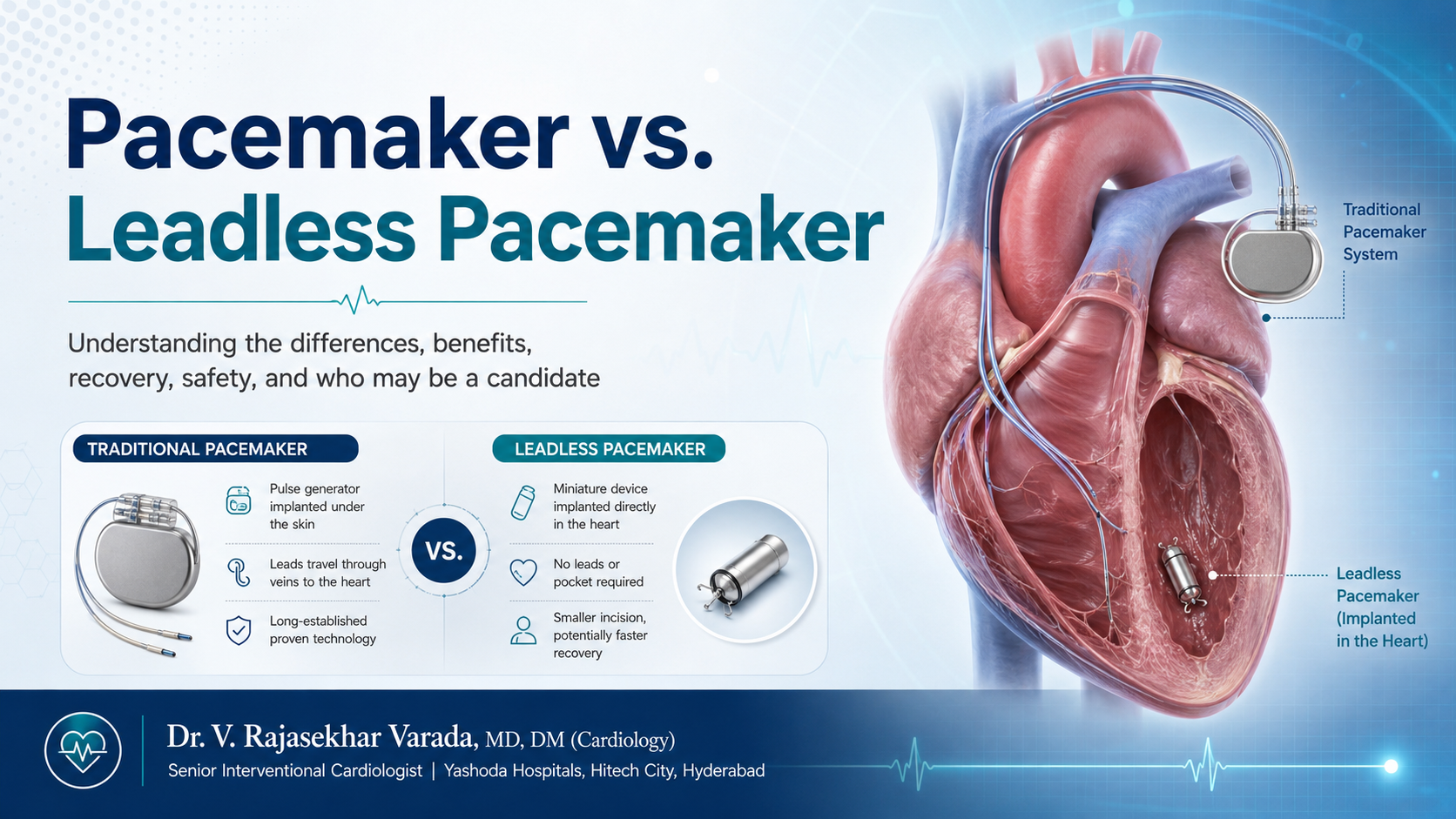
A pacemaker may be recommended when symptoms are caused by an excessively slow heartbeat, significant pauses or heart block.
Implantable cardioverter-defibrillator
An ICD may be recommended for selected patients at significant risk of dangerous ventricular rhythms or sudden cardiac arrest.
The purpose of the consultation is to match treatment to the confirmed problem. Palpitations alone do not automatically mean that you need medication, ablation or an implanted device.
Can Anxiety Cause Palpitations?
Yes. Anxiety can increase adrenaline, accelerate the heartbeat and make normal heart activity feel more noticeable.
However, it is important not to assume that every palpitation is psychological.
Consider medical evaluation when:
- Episodes begin and end suddenly
- Your heart rate becomes very fast
- Symptoms wake you from sleep
- You feel faint
- Episodes occur during exercise
- Symptoms are increasing
- You have an abnormal ECG
- You have a family history of rhythm disease
- Palpitations continue despite improvement in anxiety
An arrhythmia and anxiety can also occur together. A rhythm episode may trigger fear, and that fear may then intensify the awareness of the heartbeat.
Recording the rhythm during symptoms is often more helpful than guessing whether the cause is physical or emotional.
Can a Smartwatch Diagnose the Problem?
Some smartwatches and handheld devices can:
- Record a single-lead ECG
- Display the heart rate
- Identify possible irregularity
- Save a tracing during symptoms
- Alert the user to a high or low heart rate
These recordings can be valuable when symptoms stop before a medical ECG is available.
However, wearable devices have limitations:
- Movement can create artefacts
- Automated classifications can be incorrect
- Some rhythms look similar on a single-lead recording
- A normal wearable reading does not exclude every arrhythmia
- The device does not assess the heart’s structure
- The ECG requires professional interpretation
Save the actual ECG tracing rather than only taking a screenshot of the heart-rate number. Note the time, symptoms and activity occurring during the recording.
A wearable should support medical evaluation, not replace it.
What Should You Record Before Your Appointment?
Keeping a symptom diary can significantly improve the consultation.
For every episode, record:
- Date and time
- Duration
- What you were doing
- Whether it started suddenly
- Whether it stopped suddenly
- Estimated pulse rate
- Whether the pulse felt regular or irregular
- Chest pain
- Breathlessness
- Dizziness
- Near-fainting or fainting
- Recent caffeine or alcohol intake
- Missed medications
- Sleep quality
- Any smartwatch or mobile ECG recording
Also bring:
- Previous ECGs
- Holter reports
- Echocardiogram reports
- Hospital discharge records
- A complete medication list
- Details of family heart conditions
- Any video recorded by a witness during a fainting episode
A witness’s description can be particularly valuable when you lost consciousness and cannot remember what happened.
Frequently Asked Questions
Are occasional skipped beats dangerous?
Occasional PACs or PVCs are often harmless, especially when the heart is structurally normal and there are no concerning symptoms.
Evaluation is appropriate when they are frequent, increasing or associated with fainting, chest discomfort, reduced exercise tolerance or known heart disease.
Why do I feel a strong beat after a skipped beat?
A premature beat may be followed by a short pause. The heart then fills with more blood before the next normal contraction, making that beat feel unusually strong.
Can dehydration cause palpitations?
Yes. Dehydration can increase the heart rate and contribute to changes in blood pressure or electrolyte balance.
Persistent or severe symptoms should not be attributed to dehydration without appropriate assessment.
Can caffeine cause palpitations?
Large amounts of caffeine or energy drinks can trigger symptoms in susceptible people. Individual sensitivity varies.
Rather than stopping all caffeine permanently, discuss your intake and symptom pattern with your doctor.
Why are my palpitations worse at night?
Palpitations may feel more noticeable in a quiet room or when lying down because there are fewer distractions.
Night-time episodes can also be influenced by alcohol, late meals, stress, sleep deprivation or sleep-related breathing disorders.
Repeated sustained episodes should still be assessed.
What is the difference between dizziness and near-fainting?
Dizziness is a broad term that can include spinning, imbalance or light-headedness.
Near-fainting refers more specifically to the feeling that consciousness is about to be lost.
Is one fainting episode enough to see a doctor?
Yes, particularly when the fainting was unexplained, occurred during exercise, happened without warning, caused an injury or occurred in someone with heart disease or a family history of sudden death.
Can a normal ECG rule out an arrhythmia?
No. A routine ECG records only a short period. An intermittent arrhythmia may not occur during that recording.
Longer monitoring may be needed to connect the symptom with the heart rhythm.
Will I need an electrophysiology study?
Not necessarily. Most evaluations begin with history, examination, ECG and appropriate non-invasive monitoring.
An EP study is used selectively when the findings suggest a rhythm problem that requires more detailed electrical testing.
Does seeing an electrophysiologist mean I need ablation?
No. Many patients need only monitoring, reassurance, trigger management or medication.
Ablation is recommended only when there is a rhythm problem for which the expected benefits justify the procedure.
About Dr. V. Rajasekhar Varada
Dr. V. Rajasekhar Varada, MD, DM (Cardiology) is a senior interventional cardiologist and Clinical Director at Yashoda Hospitals, Hitech City, Hyderabad, with 27 years of experience.
He is known for his combined expertise in interventional cardiology and electrophysiology. His clinical work includes complex coronary interventions, electrophysiology procedures and cardiac-device implantations.
His areas of expertise include:
- Evaluation and treatment of heart rhythm disorders
- Electrophysiology studies
- Catheter ablation
- Pacemaker implantation
- Leadless pacemaker implantation
- Cardiac resynchronisation devices
- Implantable cardioverter-defibrillators
- Complex coronary angioplasty
- Image-guided PCI
- Rotablation
- Laser coronary angioplasty
- TAVR and structural-heart interventions
- Impella-assisted high-risk PCI
Medical disclaimer: This article is intended for patient education and should not be used as a substitute for an individual medical consultation. Seek urgent medical care for chest pain, severe breathlessness, loss of consciousness, stroke symptoms or a sustained rapid heartbeat.