 090003 25483
 Yashoda Hospitals Hitec City Hyderabad, Kothaguda, Telangana 500084

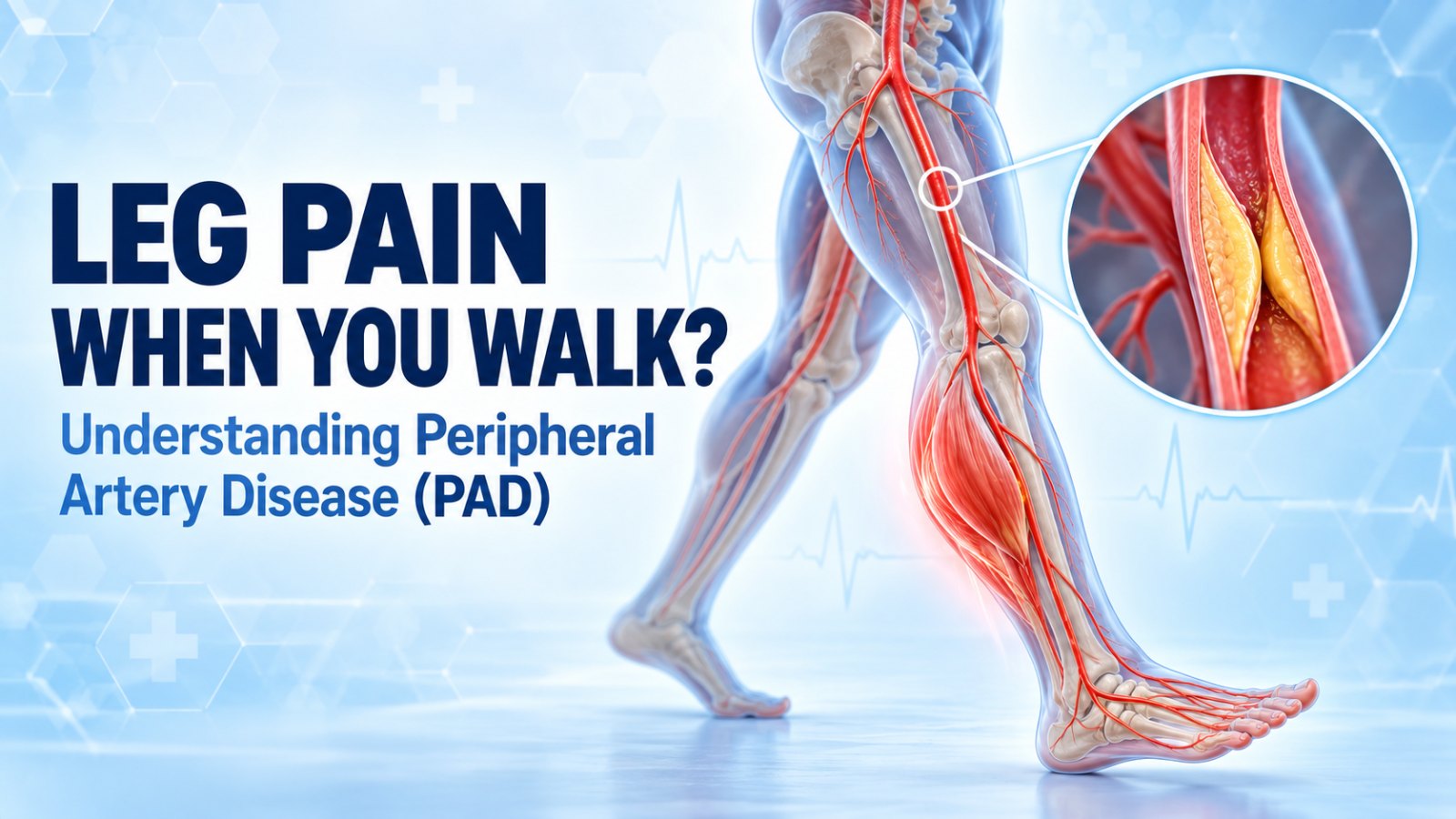
You walk to the vegetable market, and halfway there your calf starts to cramp. You stop, the pain fades in a few minutes, and you carry on. It happens again on the way back. You blame age, a “nerve problem”, or not drinking enough water. But that pattern of pain that comes with walking and goes with rest has a medical name, and it is often a warning sign about your arteries, not your muscles.
It is called Peripheral Artery Disease (PAD). It affects well over 100 million people worldwide, and in India it is especially common among people with diabetes and those who smoke or chew tobacco. Many people do not know they have it until it becomes serious. This guide explains what PAD is, why it matters for your heart as much as your legs, and how it can be treated, often without open surgery.
In this article
What Is Peripheral Artery Disease?
PAD is the same disease process that causes heart attacks, atherosclerosis, the build-up of cholesterol-rich plaque inside arteries, but in the arteries that supply your legs. As the arteries narrow, the leg muscles do not get enough oxygen-rich blood when they are working harder, such as while walking or climbing stairs.
Why PAD Is a Warning About Your Heart
This is the part most people miss. If the arteries in your legs are narrowed, there is a high chance that the arteries in your heart and brain are affected too. People with PAD have a significantly higher risk of heart attack and stroke than people without it. Diagnosing PAD is often the first opportunity to protect the whole body, not just the legs.
Key takeaways
- Calf, thigh or buttock pain that starts with walking and eases with rest can be PAD.
- Diabetes, smoking or tobacco chewing, high BP and high cholesterol greatly increase the risk.
- A simple, painless test called the Ankle-Brachial Index (ABI) can detect PAD.
- PAD signals a higher risk of heart attack and stroke; full cardiovascular care matters.
- Non-healing foot wounds or pain at rest need urgent evaluation to protect the limb.
Symptoms: What PAD Feels Like
Claudication
Cramping, aching or tiredness in the calves, thighs or buttocks while walking, relieved within minutes of rest.
Cold or pale feet
One foot feels colder than the other, or the skin looks pale, shiny or bluish.
Slow-healing wounds
Cuts, cracks or sores on the toes or feet that take weeks to heal, especially in diabetics.
Other clues
Hair loss on the legs, slow toenail growth, weak or absent foot pulses, erectile dysfunction in men.
Importantly, many people with PAD have no symptoms, or they unconsciously slow down and walk less, so the pain never shows up. People with diabetes may also have nerve damage (neuropathy) that masks the pain.
Who Is at Risk?
- Diabetes, one of the strongest risk factors, and very common in India
- Smoking, beedi or tobacco chewing
- High blood pressure and high cholesterol
- Age above 50, especially with any of the above
- Kidney disease
- Known heart disease or previous stroke
How PAD Is Diagnosed
The Ankle-Brachial Index (ABI)
This simple, painless test compares the blood pressure at your ankle with the blood pressure in your arm. An ABI of 0.90 or below indicates PAD. It takes about 15 minutes and needs no needles.
Further tests if needed
- Arterial Doppler ultrasound to map where the narrowings are.
- CT or MR angiography for a detailed road map before treatment.
- Peripheral angiography, often combined with treatment in the same sitting.
Treatment: From Lifestyle to Minimally Invasive Repair
Protecting your arteries everywhere
Every PAD patient benefits from controlling the underlying disease: stopping all tobacco, tight sugar control, cholesterol-lowering medicines (statins), blood pressure control and, usually, antiplatelet medicines. These lower the risk of heart attack and stroke as well.
Structured walking
Supervised walking programmes are proven to increase pain-free walking distance. The method: walk until the pain becomes moderate, rest until it settles, then walk again, for about 30 to 45 minutes, at least three times a week. Over weeks, the muscles adapt and small natural bypass vessels develop.
Peripheral angioplasty and stenting
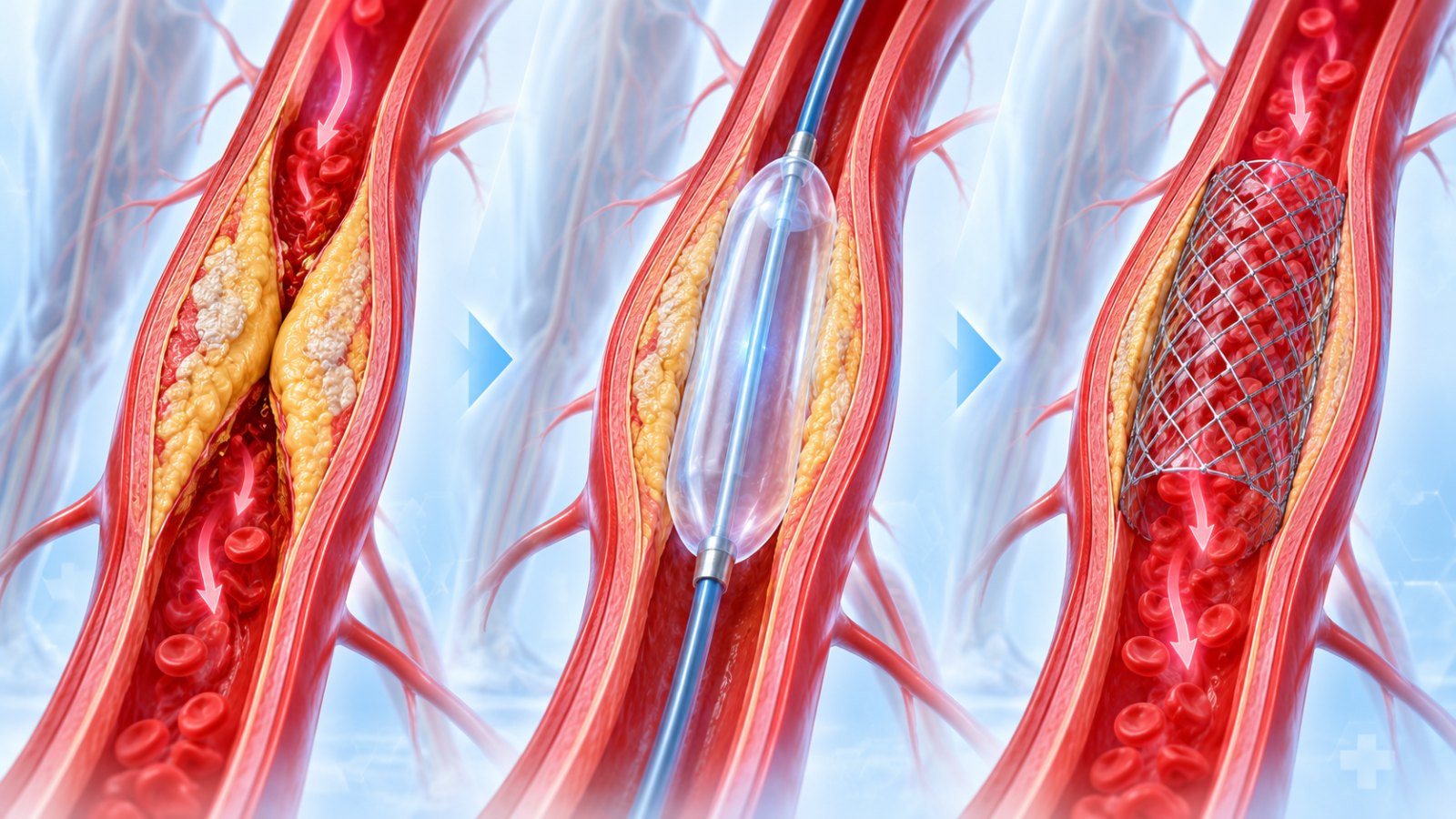
When symptoms limit your life despite treatment, or when the limb is threatened, blood flow can be restored through a small puncture, usually in the groin, without open surgery:
- Balloon angioplasty to stretch open the narrowed artery.
- Drug-coated balloons that release medicine to reduce re-narrowing.
- Stents to keep the artery open where needed.
- Atherectomy techniques to remove or modify hard, calcified plaque in selected cases.
Most patients walk the same or the next day. Surgical bypass remains an option for very long or complex blockages.
A Simple Walking Self-Check
Why Consult an Interventional Cardiologist?
Because PAD is a whole-body artery disease, it makes sense to have it evaluated by someone who treats arteries everywhere. Dr. V. Rajasekhar is a senior interventional cardiologist at Yashoda Hospitals, Hitec City, with 27 years of experience and expertise in peripheral vascular interventions alongside coronary procedures. That means your legs, heart and overall cardiovascular risk are assessed together, and treatment is planned as one picture.
Frequently Asked Questions
Is leg pain while walking always PAD?
No. Spinal nerve compression, arthritis and muscle problems can also cause leg pain. PAD pain typically appears at a predictable walking distance and eases with standing still. An ABI test helps tell them apart.
Can PAD be cured?
The underlying atherosclerosis cannot be removed completely, but it can be controlled very effectively. Symptoms often improve greatly with exercise, medicines and, when needed, angioplasty.
Is peripheral angioplasty painful?
It is done under local anaesthesia through a small puncture. Most patients feel only mild pressure, and many go home within a day.
Why are diabetics more at risk of amputation?
Diabetes narrows the smaller arteries below the knee and can reduce sensation in the feet, so wounds go unnoticed and heal poorly. Early PAD detection and restoring blood flow can prevent many amputations.
Should I stop walking if my legs hurt?
No. Unless you have rest pain or wounds, walking through moderate discomfort with rest breaks is one of the best treatments. Check with your doctor for a safe plan.
Does having PAD mean I have heart blockages too?
Not always, but the risk is higher. Your cardiologist may recommend heart evaluation to make sure nothing is missed.
Leg pain slowing you down?
Get your leg arteries and heart checked together. Consult Dr. V. Rajasekhar at Yashoda Hospitals, Hitec City.
Call 090003 25483Book a ConsultationYashoda Hospitals, Hitec City, Kothaguda, Hyderabad 500084
This article is for general education and does not replace a personal medical consultation. Treatment depends on your individual symptoms, test results and overall health.